[This comes highly recommended by Big Ideas Stream Member Michael Atkins]
For the audio-only debate, NPR's hosts restricted the discussion to three main topics: Iran and the lessons of Iraq, relations with China, and the Immigration issue.
Listen here. Or check the transcript here.
Sunday, December 9, 2007

Friday, December 7, 2007
Big Ideas in Politics: Electability (That "Wishy-washy, Squishy-squashy Pseudoscience"
From New York Magazine:
It must have come as something of a shock to the political professionals to pick up the New York Times in mid-November and find a front-page story about a couple of polls of Iowa and New Hampshire voters. Headlined “Polls Find Voters Weighing Issues vs. Electability,” the article reaffirmed the conventional wisdom that electability will heavily influence primary and caucus voters. But the shock came when these voters considered who is the most electable: 47 percent of Iowa Democrats and 68 percent of New Hampshire Democrats named Clinton, and a plurality of Republicans in both states gave the nod to Giuliani. In less than a year, the two candidates had managed to turn what was thought to be their Achilles’ heel into one of their greatest strengths.Which just goes to show how squishy and even bankrupt “electability” is as a political concept. Unlike political judgments that are based on concrete assessments of, say, a candidate’s record or even something as grubby as his fund-raising prowess, those that are based on a candidate’s supposed electability can change on a moment’s notice. And then change again. Electability is completely ephemeral. Even those hoary and maddeningly indefinable political qualities like “character” and “authenticity” have more meat on their bones.
Monday, December 3, 2007
Big Ideas Events: George Packer on Iraq
New Yorker staff writer George Packer will be talking with Clyde Haberman, NYC columnist for the New York Times at the Center for Global Affairs in the Woolworth Building.
Here is Packer's official bio in the New Yorker:
Wednesday, December 5th
6:30PM - 7:45PM
The Center for Global Affairs
Woolworth Building
15 Barclay Street, 4th Floor (Between Broadway and Church Street)
The event is being hosted by the Center for Global Affairs, so you'll have to register with them.
(212) 992-8380
scps.global.affairs@nyu.edu
Please send me a quick email at Eric.Ozawa at NYU to let me know if you'll be coming.
-Eric
Here is Packer's official bio in the New Yorker:
George Packer became a staff writer for The New Yorker in 2003 and has covered the Iraq War for the magazine. His book “The Assassins’ Gate: America in Iraq,” was named one of the ten best books of 2005 by the New York Times and won the New York Public Library’s Helen Bernstein Book Award and an Overseas Press Club’s book award. He has also written about the atrocities committed in Sierra Leone, civil unrest in the Ivory Coast, the megacity of Lagos, and global counterinsurgency. In 2003, Packer was awarded two Overseas Press Club awards, one for his twenty-thousand-word examination of the difficulties faced during the occupation and reconstruction of Iraq, which appeared in November, 2003, and the other for his coverage of the civil war in Sierra Leone, which appeared in January, 2003. . . .Links to Packer's articles via Wikipedia.
Wednesday, December 5th
6:30PM - 7:45PM
The Center for Global Affairs
Woolworth Building
15 Barclay Street, 4th Floor (Between Broadway and Church Street)
The event is being hosted by the Center for Global Affairs, so you'll have to register with them.
(212) 992-8380
scps.global.affairs@nyu.edu
Please send me a quick email at Eric.Ozawa at NYU to let me know if you'll be coming.
-Eric
George Packer on Iraq
From George Packer's blog for the New Yorker, Interesting Times:
Packer recommends these articles to understand recent events in Iraq:
With all the necessary qualifications and disclaimers, here are a few points. First, the reports of a new breathing space for civilians in Baghdad and other cities are accurate—not a return to “normal life,” since Iraq hasn’t been normal for more than a quarter century and won’t be for a long time, but a degree of security that has allowed some brave families to pretend that they can live the way normal people do. (Earlier in the war, this was the single most commonly expressed desire among the Iraqis I interviewed.) But this security goes only so far. The large-scale sectarian cleansing by militias, much of which was completed in 2006 and 2007, has halted or paused. The days of dozens of bodies turning up every morning in Baghdad’s garbage dumps and side streets are over, at least for now. But most Iraqis live under the rule of some armed group or another, enforced by teen-agers with Kalashnikovs, and, to survive, ordinary people have to comply with the code of what amounts to a fundamentalist gangland. The violence persists on a smaller scale, not with roving bands of militiamen purging whole districts but inside the walled sectarian enclaves that used to be Iraq’s urban neighborhoods.
More Analysis here.
Packer recommends these articles to understand recent events in Iraq:
- Damien Cave and Alissa Rubin, of the Times, on the stirrings of a return to normal life in Baghdad
- Tom Ricks, of the Post, on the failure of the Iraqi government to take advantage of these stirrings
- Jon Lee Anderson, of The New Yorker, on the Americans’ dubious new allies in Baghdad
- Ghaith Abdul-Ahad, of The Guardian, on the same
- Steven Lee Myers and Alissa Rubin, of the Times, on Washington’s scaled-back plans for political unity in Iraq
- Patrick Healy, of the Times, on how the Democrats are responding to better news out of Iraq
- Alissa Rubin, of the Times, on the beginning of the end of the surge
- Michael Gordon, of the Times, on military strategy after the surge
- Marc Lynch, of the blog Abu Aardvark; Brian Katulis, of the Center for American Progress; and Colin Kahl, of the Center for a New American Security, debate post-surge strategy
Big Ideas in Facebook: Privacy vs. Marketing
From the Financial Times:
Or listen to the coverage on WNYC's Brian Lehrer Show.Privacy advocates declared victory yesterday after Facebook, the social networking website, moved to placate users concerned about the intrusiveness of its new Beacon advertising system.
Changes to Beacon, announced late on Thursday, will allow users to "opt-in" to sharing information through the service, which broadcasts purchases made on outside websites to Facebook users' friends.
This is the second time in a little more than a year that Facebook has been forced to change a new technology after a backlash over privacy. MoveOn.org, the online advocacy group that last week joined critics of the Beacon service, called Facebook's move a "big step in the right direction".
Beacon has proved the most controversial of several new money-making technologies unveiled last month by Mark Zuckerberg, Facebook's 23-year-old founder.
The technologies represented its most ambitious attempt yet to cash in on the social connections between the site's 50m users.
Under the service, friends of a Facebook user who buys a book on Amazon.com, for example, may see the Amazon logo next to a message about the purchase when they log into the Facebook site. The changes mean that users will now be asked to explicitly authorise the publication of each Beacon message, according to Facebook.
Previously, messages would publish automatically unless a user said "no" to a publication request within a certain amount of time.
MORE...
Big Ideas in Politics: NYU's Brennan Center for Justice on the Indiana Voter ID Case
From the Brennan Center Website:
The Indiana voter ID case is the most important voting rights case since Bush v. Gore. Due to be heard by the U.S. Supreme Court on January 9, 2008, Crawford v. Marion County Election Board will determine which American citizens are able to exercise their right to vote and which Americans are not. The Indiana law is the most restrictive ID law in America and will exclude many eligible voters from participating in our democratic process.
The Brennan Center filed an amicus brief with the U.S. Court of Appeals for the Seventh Circuit challenging the constitutionality of an Indiana law requiring citizens to present photo ID as a condition of voting. In its amicus brief, the Brennan Center argued that impersonation fraud is an extremely unlikely and unsubstantiated occurrence that can be prevented without requiring a photo ID, and that the Indiana law fails to address more common forms of voter fraud. The Center's brief marshalled the best evidence on individual voter fraud and catalogued the practices in other states for preventing voter fraud without resorting to photo ID. On January 4, 2007, the United States Court of Appeals for the Seventh Circuit, in an opinion authored by Judge Posner, upheld the lower court decision and found that the state law did not unduly burden the right to vote. Plaintiffs were denied a rehearing en banc on April 5, 2007.
The Indiana voter ID case is the most important voting rights case since Bush v. Gore. Due to be heard by the U.S. Supreme Court on January 9, 2008, Crawford v. Marion County Election Board will determine which American citizens are able to exercise their right to vote and which Americans are not. The Indiana law is the most restrictive ID law in America and will exclude many eligible voters from participating in our democratic process.
The Brennan Center filed an amicus brief with the U.S. Court of Appeals for the Seventh Circuit challenging the constitutionality of an Indiana law requiring citizens to present photo ID as a condition of voting. In its amicus brief, the Brennan Center argued that impersonation fraud is an extremely unlikely and unsubstantiated occurrence that can be prevented without requiring a photo ID, and that the Indiana law fails to address more common forms of voter fraud. The Center's brief marshalled the best evidence on individual voter fraud and catalogued the practices in other states for preventing voter fraud without resorting to photo ID. On January 4, 2007, the United States Court of Appeals for the Seventh Circuit, in an opinion authored by Judge Posner, upheld the lower court decision and found that the state law did not unduly burden the right to vote. Plaintiffs were denied a rehearing en banc on April 5, 2007.
Big Ideas in Politics: Adam Nagourney on the Candidates' Strategies for Iowa and New Hampshire
From the Times today:
The Times 2008 Election Guide
There has probably never been a presidential campaign quite as challenging to track as the 2008 race, given the sheer number of candidates and the shifting calendar of nominating contests. But with less than a month to go before the voting starts, it’s becoming clear that Iowa has become the prime battle ground for Democrats, while New Hampshire has become the main stage for Republicans.More.
The Times 2008 Election Guide
Monday, November 26, 2007
Globalism and the Ground Beneath Your Feet

For an interesting case study in globalism and city bureaucracy, check out the New York Times article on the foundry in West Bengal that produces many of the manholes in New York City. It will be interesting to see what the effect of this publicity will be on the city's policies and on the workers at the foundry itself.
New York City’s Department of Environmental Protection gets most of its sewer manhole covers from India. When asked in an e-mail message about the department’s source of covers, Mark Daly, director of communications for the Department of Citywide Administrative Services, said that state law requires the city to buy the lowest-priced products available that fit its specifications.
Mr. Daly said the law forbids the city from excluding companies based on where a product is manufactured.
Municipalities and utility companies often buy their manhole covers through middlemen who contract with foreign foundries; New York City buys the sewer covers through a company in Flushing, Queens.
Con Edison said it did not plan to cancel any of its contracts with Shakti after seeing the photographs, though it has been phasing out Indian-made manhole covers for several years because of changes in design specifications.
Manhole covers manufactured in India can be anywhere from 20 to 60 percent cheaper than those made in the United States, said Alfred Spada, the editor and publisher of Modern Casting magazine and the spokesman for the American Foundry Society. Workers at foundries in India are paid the equivalent of a few dollars a day, while foundry workers in the United States earn about $25 an hour.
The men making New York City’s manhole covers seemed proud of their work and pleased to be photographed doing it. The production manager at the Shakti Industries factory, A. Ahmed, was enthusiastic about the photographer’s visit, and gave a full tour of the facilities, stopping to measure the temperature of the molten metal — some 1,400 degrees Centigrade, or more than 2,500 degrees Fahrenheit.
Big Ideas in Politics: Charles Rangel on the Tax Bill, Barney Frank on the Subprime Crisis
Rangel, the Democratic Chairman of the House Ways and Means Committee, and Frank, the Democratic Chairman of the House Financial Services Committee, talk to Charlie Rose about the tax bill, the subprime crisis, and the upcoming Presidential election.
Monday, November 19, 2007
Big Ideas in Politics: Populism as a Competitive Strategy in the Iowa Democratic Caucus
Populism is back this Presidential election, on the right and the left. Check out this analysis of the risks and strategies of Edwards' populist campaign and its current approach: attacking rival Hillary Clinton while playing nice with Barack Obama.
Big Ideas in Politics: "Heroic Conservatism" Michael Gerson on the Future of the Republican Party
Leonard Lopate of WNYC just had on an interesting interview with President Bush's former speechwriter, Michael Gerson, on the future of the Republican Party.
Here's the official description from the Leonard Lopate show:
President George W. Bush’s former speechwriter, Michael J. Gerson, shares his vision for the Republic party. He says the party must adopt what he calls "heroic conservatism" with more focus on promoting human rights and ending poverty. Gerson’s new book is Heroic Conservatism: Why Republicans Need to Embrace America's Ideals (And Why They Deserve to Fail If They Don't).
You can listen to the segment on line here.
RSVP for Friday Nov. 30: Ice Skating in Bryant Park and Nicholas Kristof at the NYPL
It's time to RSVP for an event coming up on the last day of this month:
Nicholas Kristof will be speaking at the New York Public Library on the genocide in Darfur and the difficulties of covering such stories in the US media. Nicholas Kristof is a columnist for the New York Times and a two-time winner of the Pulitzer Prize, once for his reporting on the Tiananmen Square Democracy movement, and a second time for his coverage of Darfur.
The event will take place on a Friday night, so afterwards we're planning to walk down the steps of library into Bryant Park to go ice skating. The outdoor rink (which is being sponsored by Citi) would make an interesting case study for the kind of programs we were discussing last night - programs designed to bring happiness to the people.
Time: 7:00 pm Friday, November 30
Place: New York Public Library at Bryant Park
RSVP with me, at Eric.Ozawa at NYU.edu by Wednesday Nov. 22.
Nicholas Kristof will be speaking at the New York Public Library on the genocide in Darfur and the difficulties of covering such stories in the US media. Nicholas Kristof is a columnist for the New York Times and a two-time winner of the Pulitzer Prize, once for his reporting on the Tiananmen Square Democracy movement, and a second time for his coverage of Darfur.
The event will take place on a Friday night, so afterwards we're planning to walk down the steps of library into Bryant Park to go ice skating. The outdoor rink (which is being sponsored by Citi) would make an interesting case study for the kind of programs we were discussing last night - programs designed to bring happiness to the people.
Time: 7:00 pm Friday, November 30
Place: New York Public Library at Bryant Park
RSVP with me, at Eric.Ozawa at NYU.edu by Wednesday Nov. 22.
The Pursuit of Happiness: A Follow-up to Last Night's Meeting
Prompted by Eduardo Porter's provocative Op-Ed in the Times, we had an interesting discussion last night about money, happiness, and good government (that also touched on the Italian Constitution, Paris Plage, free tacos, the Best Town in America, the Sophia Coppola Syndrome, and Britney Spears' decision to shave her head).
Here's the opening of the essay for those who missed it (and the pizza from Lombardi's):
Here's the opening of the essay for those who missed it (and the pizza from Lombardi's):
The framers of the Declaration of Independence evidently believed that happiness could be achieved, putting its pursuit up there alongside the unalienable rights to life and liberty. Though governments since then have seen life and liberty as deserving of vigorous protection, for all the public policies aimed at increasing economic growth, people have been left to sort out their happiness.More here.This is an unfortunate omission. Despite all the wealth we have accumulated — increased life expectancy, central heating, plasma TVs and venti-white-chocolate-mocha Frappuccinos — true happiness has lagged our prosperity. As Bobby Kennedy said in a speech at the University of Kansas in March 1968, the nation’s gross national product measures everything “except that which makes life worthwhile.”
The era of laissez-faire happiness might be coming to an end. Some prominent economists and psychologists are looking into ways to measure happiness to draw it into the public policy realm. Thirty years from now, reducing unhappiness could become another target of policy, like cutting poverty.
Friday, November 9, 2007
Follow Up: Strange Culture in the News
Last week, we got together with the Philostream to talk about the questions raised by Lynn Hershman Leeson's film Strange Culture. We were fortunate to have the artist Gregory
Sholette there with us to discuss the details of the film and to fill us in on what has happened to the Steve Kurtz's case since the film was released.
You can listen to a radio story from NPR's All Things Considered on the film here (thanks, Allie). You can also read an article in the Nation on the film, and find out more about the Critical Art Ensemble Defense Fund.
Sholette there with us to discuss the details of the film and to fill us in on what has happened to the Steve Kurtz's case since the film was released.
You can listen to a radio story from NPR's All Things Considered on the film here (thanks, Allie). You can also read an article in the Nation on the film, and find out more about the Critical Art Ensemble Defense Fund.
Sunday, November 4, 2007
Last Week's Event: Fright Night with n+1: Environmentalism and The Politics of Fear
You can check out a summary in the Times of the debate on fear and environmentalism that we attended at the New York Public Library on Tuesday last week, the day before Halloween. The starting point for the debate was Alex Gourevitch's provocative argument:
You can read the full text of this attack on Environmentalism from the Left on the website of the journal n+1.
Environmentalism is not just some politics. It’s a political project, a full-bodied ideology, and one that presents itself in terms of progress and aspiration. But when you look at what this ideology is built on, it’s built on the idea that a collective threat that makes security the basic principle of politics and makes the struggle for survival the basic and central aim of our social and political life. This, to me, is not a progressive politics at all.
You can read the full text of this attack on Environmentalism from the Left on the website of the journal n+1.
Saturday, November 3, 2007
Big Ideas Event: Patriot Act vs. Freedom of Expression vs. Genetically-engineered Food
The new documentary film, Strange Culture, is a perfect storm of the big ideas we've been thinking about this semester:
The event will take place THIS MONDAY, November 5: 6:30 - 8:30 pm. Palladium Residence Hall (on E. 14th Street, between 3rd Ave. and 4th Ave.) in Seminar B (Third Floor near the Multi-purpose room).
Come one, come all. Invite your friends.
I'd like to urge especially those who have missed a lot of our events to come to this event.
Please send me a quick email (Eric.Ozawa at Nyu) to let me that I can expect you.
- the Legacies of September 11th (the Patriot Act, War on Terror, Dept of Homeland Security and the places where the new approach to security comes into conflict with freedom),
- the Recent Renaissance in the way we think about the food we eat (new and old ideas, such as Localism and Farmer's Markets, genetic engineering, , the movement to reorient the farm bill away from agrobusiness 'monocultures', the omnipresence of corn.
The event will take place THIS MONDAY, November 5: 6:30 - 8:30 pm. Palladium Residence Hall (on E. 14th Street, between 3rd Ave. and 4th Ave.) in Seminar B (Third Floor near the Multi-purpose room).
Come one, come all. Invite your friends.
I'd like to urge especially those who have missed a lot of our events to come to this event.
Please send me a quick email (Eric.Ozawa at Nyu) to let me that I can expect you.
Wednesday, October 24, 2007
Suggested Event: A Discussion about Homeland Security
10/25 Thurs, 6:30 –7:45 pm “Returning from “The Edge of Disaster””
A Discussion with a former advisor on Homeland Security and the faculty of NYU’s Center for Global Affairs.
Stephen E. Flynn, Jeane J. Kirkpatrick senior fellow for National
Security Studies, Council on Foreign Relations
Michael Oppenheimer, moderator; clinical associate professor, CGA
Stephen Flynn, author of The Edge of Disaster: Rebuilding a
Resilient Nation (2007) is the former advisor on homeland security
for the U.S. Commission on National Security (Hart-Rudman
Commission) and a retired Coast Guard officer. He researches
and writes on issues related to homeland security.
Additional speakers to be announced.
Sign up for updates by e-mailing scps.global.affairs@nyu.edu
To register for an event or for more information, please call the NYU Center for Global Affairs at (212) 992-8380, or e-mail them at scps.global.affairs@nyu.edu.
Sunday, October 14, 2007
If We Are What We Eat, Then What Should We Be Eating? More Michael Pollan
The story of how the most basic questions about what to eat ever got so complicated reveals a great deal about the institutional imperatives of the food industry, nutritional science and — ahem — journalism, three parties that stand to gain much from widespread confusion surrounding what is, after all, the most elemental question an omnivore confronts. Humans deciding what to eat without expert help — something they have been doing with notable success since coming down out of the trees — is seriously unprofitable if you’re a food company, distinctly risky if you’re a nutritionist and just plain boring if you’re a newspaper editor or journalist. (Or, for that matter, an eater. Who wants to hear, yet again, “Eat more fruits and vegetables”?) And so, like a large gray fog, a great Conspiracy of Confusion has gathered around the simplest questions of nutrition — much to the advantage of everybody involved. Except perhaps the ostensible beneficiary of all this nutritional expertise and advice: us, and our health and happiness as eaters.
Michael Pollan takes on this pressing question in this interesting article on what we talk about when we talk about food in the New York Times Magazine.
After King Corn: More From Michael Pollan
A few years ago, an obesity researcher at the University of Washington named Adam Drewnowski ventured into the supermarket to solve a mystery. He wanted to figure out why it is that the most reliable predictor of obesity in America today is a person’s wealth. For most of history, after all, the poor have typically suffered from a shortage of calories, not a surfeit. So how is it that today the people with the least amount of money to spend on food are the ones most likely to be overweight?
Michael Pollan, who is interviewed in King Corn and credited as part of the inspiration of the film , comes up with an answer to that question in this provocative New York Times article available here.
I also suggest reading Michael Pollan's widely admired book The Ominvore's Dilemma. You can find it on line at Amazon or in local bookstores such as Three Lives, Biography Books, or The St. Mark's Bookshop.
Friday, October 12, 2007
King Corn Screening + Q&A with the Producers
As part of this month's topic for Big Ideas, "You are What You Eat," we'll be heading to a screening of the film, King Corn, at Cinema Village this Sunday.
Here's a review of the film from the Boston Globe:
Please RSVP with me at Eric.Ozawa at NYU and Tell Your Friends.
Time: Sunday, October 14th
Meet in the Broome lobby at 2:30.
Here's a review of the film from the Boston Globe:
Curt Ellis and Ian Cheney , two recent college grads from Boston, decide to plant and farm an acre of corn in Iowa. For a year they watch their crop grow, only to discover at the end that it's unfit for human consumption. What ensues is an enormously entertaining moral, socio-economic odyssey (and statistical bonanza) through the American food industry. Ellis, Cheney, and Aaron Woolf's documentary is clear-minded and fair, but just damningly descriptive enough to leave you distrustful of everything on your plate.You can also check out this article about the film from the New York Times
Please RSVP with me at Eric.Ozawa at NYU and Tell Your Friends.
Time: Sunday, October 14th
Meet in the Broome lobby at 2:30.
Wednesday, October 3, 2007
Event: Film Screening, Pizza, and Discussion with Philosophy Stream
On Thursday night, we'll have a joint meeting with the Philosophy Stream, in which we'll be talking about some of the biggest Big Ideas of our era: Capitalism, Social Justice, and Globalism.
We'll start with a film, Mardi Gras Made in China and then move on to a discussion that will address Marx and Appiah.
Pizza (globalism's food par excellence) will be served.
8:30 - 10:00 in the Broome Room
We'll start with a film, Mardi Gras Made in China and then move on to a discussion that will address Marx and Appiah.
Pizza (globalism's food par excellence) will be served.
8:30 - 10:00 in the Broome Room
Sunday, September 30, 2007
Event: American Torture
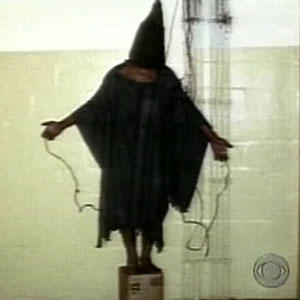
The event is part of a series hosted by NYU Wagner.
American Torture: From the Cold War to Abu Ghraib and Beyond
Thursday, October 4th, 12:30-1:30pm
Rudin Forum, The
Meet RA Trish in the Broome Lobby at 12:00 pm, or meet her there!
RSVP for this event online, or by calling the NYU Wagner RSVP line at 212-998-7546.
Michael Otterman, freelance journalist and documentary filmmaker; former visiting scholar at the Center for Peace and Conflict Studies (CPACS) at the
In American Torture (Pluto Press, 2007), Michael Otterman reveals how torture became standard practice in today's War on Terror and how it was refined, spread and legalized. Long before Abu Ghraib became a household name, the
Thanks folks, and we’ll see you there!
Thomas Friedman and Roth on "9/11":
The prospect of the upcoming election has made Thomas Friedman change his mind about a few things. For one, he's tired of living in a "post-9/11 world" in which the events of September 11, 2001 dominate the political narrative. He's decided that 9/11 is over, and that it "made us stupid" : "I honor, and weep for, all those murdered on that day. But our reaction to 9/11 — mine included — has knocked America completely out of balance, and it is time to get things right again."
It's a reaction that echoes not only the Onion Headline he cites - "Giuliani To Run For President Of 9/11" - but also something that the Philip Roth said in an interview with the French newspaper, Le Figaro, back in 2002. At the time, it seems, Roth's comments were considered too inflammatory, and the interview quickly disappeared from the web.
Here are two excerpts:
It's a reaction that echoes not only the Onion Headline he cites - "Giuliani To Run For President Of 9/11" - but also something that the Philip Roth said in an interview with the French newspaper, Le Figaro, back in 2002. At the time, it seems, Roth's comments were considered too inflammatory, and the interview quickly disappeared from the web.
Here are two excerpts:
JEAN-LOUIS TURLIN: Have we properly assessed what happened on September 11?
PHILIP ROTH: I really don’t know, and I don’t care. That interests me as a citizen, but not as a novelist. September 11 is not something that I can draw on in an imaginative level. The only story that I can take from it is the kitsch in all its horror — not the horror of what’s happened, but the great distortion of what’s happened. It’s almost embarrassing, the kitschification of 3,000 people’s deaths. Other cities have experienced far worse catastrophes. America itself has inflicted some in its past, even if it was for the right reasons — I’m not a pacifist. One wouldn’t dream of slighting these people, it is awful, but we need to keep a sense of proportion about these things. What we’ve been witnessing since September 11 is an orgy of national narcissism and a gratuitous sense of victimisation that is repellent. And it doesn’t stop. Even now, it’s impossible to watch a baseball game without having to listen to “God Bless America” beforehand or without being asked to remember “our heroes.” I feel like saying: stop, dignity demands that you stop it.
...TURLIN: It has been said many times that with September 11, the United States lost its innocence.
ROTH: What innocence? That’s so naive. From 1668 to 1865, we had slavery in this country. Then, from 1865 to 1955, a society marked by brutal segregation. What innocence? I don’t really know what people are talking about.
What do you think?
More via Radio OpenSource, via The Telegraph
Iranian Blogs Debate the Big Ideas Behind President Ahmadinejad’s Visit to Columbia University
The New York Times has just published excerpts from some Iranian blogs reacting to President Ahmadinejad’s controversial visit to Columbia University.
Here's one:
Here's one:
Most Western news agencies like CNN and Fox News, which are branded by the regime as the agents of a Western cultural war, broadcast the speech of President Ahmadinejad live. It is interesting that none of the channels inside our country did that. What does this mean? Does it mean we don’t trust ourselves? Does it mean that we worry we might let something slip? Does it mean that we fear that our president might let something slip?
It means that knowing is not a right our people have! It means that other countries abide by democracy more than we do. It means that even we don’t believe ourselves, even that we fear ourselves. We fear that we might say something by mistake and that our lies would be revealed to the people. Really, why are the state officials against open access to information? Why don’t the people even have the right to hear the speech of their elected president? Why can’t they hear his reasoning for issues like nuclear power, democracy in Iran, and so on?
What is interesting is that we claim the Americans want to prevent our voice from being heard, so why do we censor ourselves?
— Poor Iran, yaghiha.blogfa.ir, Sept. 24, translated from Persian by the Iran Human Rights Documentation Center.
Thursday, September 27, 2007
Reactions to the Rally for Senator Obama in Washington Square

Senator Barack Obama In Washington Square Park
Originally uploaded by rhatchmiller
What did you think of the speech?
What do you see as the big ideas of the upcoming election?
The Obama Rally in Washington square

Obama @ Washington square
Originally uploaded by danicranmer
Well, it was crowded.
For a while, it didn't look like those of us still standing in line behind the statue of Garibaldi were ever going to make it in. But then someone - maybe the secret service, maybe the candidate himself - made the executive decision to throw caution to the wind and remove the security check points and just allow everyone in.
Sunday, September 23, 2007
Big Idea for Changing African Leadership
 What do YOU think of this Big Idea? Check out this Sunday Times article:
Tycoon sets out to save Africa
BYLINE: Grant Ringshaw
Business Section of the Times
October 29, 2006
Telecom's billionaire Mo Ibrahim wants to fight corruption by offering an annual prize of $5m to the best political leader on the continent. Grant Ringshaw reports
SEATED on a Versace sofa in his seven- storey Mayfair townhouse, Mo Ibrahim does not look like a man who spares much thought for the problems afflicting Africa.
But he does care about the continent -with real passion and hard cash. This week, Ibrahim, a 60-year-old Sudan-born British citizen and telecoms billionaire, unveiled an ambitious initiative to foster and reward good government in Africa, where 300m people still earn less than $1 (53p) a day.
He has set up a foundation to award a $5m annual prize -$500,000 a year for a decade -to the former African head of a democratic state who has shown outstanding leadership by delivering health, education, security and economic progress.
It is an extraordinary commitment by the man who made a fortune selling Celtel, his pan-African telecoms company, last year for $3.4billion.
The prize, funded entirely by Ibrahim, is the world's biggest -far larger than the £ 800,000 scooped by the winner of the Nobel peace prize. On top of the $5m, each winner will get $200,000 a year for life at the end of the 10-year period. The overall running costs of the award are expected to soar to $20m annually after a few years.
The Mo Ibrahim Foundation uses the very thing that has corrupted so many leaders in Africa -money. But this time the power of money is being used as a force for good.
Ibrahim said that "nothing, simply nothing, is more important to African development than good governance".
Read the rest of the article at LexisNexis
Friday, September 21, 2007
RSVP for Don Delillo before tickets run out
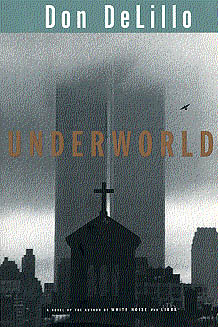
Big Ideas Event:
Don Delillo Reading
Monday, September 24, 8pm. at the 92 St Y.
People will tell you that Delillo is the most important American novelist alive today. They'll say he's more subversive than the other grand old names on the list - Toni Morrison, Phillip Roth, John Updike - more alive to the reality of the present than Cormac McCarthy. They'll say he's a recluse, a paranoiac. They'll say, like Lorrie Moore, that "No one can match his ability to let America speak through his pen. No one’s prose is better than DeLillo’s."
On Monday, you can judge for yourself.
This Monday, he'll be reading from his new novel, Falling Man, which describes the aftermath of what happened on September 11th, 2001.
We'll be thinking about the relationship between historical calamity and art, between violence and poetry, between the terrorist and the novelist - and about these questions, posed in Lorrie Moore's review of Delillo's Mao II: "If terrorists have seized control of the world narrative, if they have captured the historical imagination, have they become, in effect, the world's new novelists? For sheer influence over the human mind, have they displaced a precariously placed literature?"
For a little more background, you can head to the bookstore the library. Or you can start with the New York Times Featured Author page for Delillo.
RSVP by emailing Trish, (pcr232 at nyu).
We have a limited number of tickets, so email Trish as soon as you can.
(Be advised, however, that once you RSVP, we'll be counting on you to come to the event. Let us know 24 hours in advance if you need to cancel.)
Court Reviews Race as Factor In School Plans

Check out this NY Times article, written in December 2006, regarding the Supreme Court case Parents involved in community schools v. Seattle School District, et al.
By Linda Greenhouse
December 2006

By the time the Supreme Court finished hearing arguments on Monday on the student-assignment plans that two urban school systems use to maintain racial integration, the only question was how far the court would go in ruling such plans unconstitutional.
There seemed little prospect that either the Louisville, Ky., or Seattle plans would survive the hostile scrutiny of the court's new majority. In each system, students are offered a choice of schools but can be denied admission based on their race if enrolling at a particular school would upset the racial balance.
At its most profound, the debate among the justices was over whether measures designed to maintain or achieve integration should be subjected to the same harsh scrutiny to which Brown v. Board of Education subjected the regime of official segregation. In the view of the conservative majority, the answer was yes.
While there is no reliable data on how common these plans are, they are thought to be widespread among school districts where residential patterns would otherwise produce neighborhood schools of one race or nearly so. Depending on how broadly the court rules, possibly hundreds of districts would need to modify or scrap voluntary integration plans.
The National School Boards Association as well as the Council of the Great City Schools, representing 66 urban districts, filed briefs on behalf of Seattle and Louisville, warning of impending disruption if the justices overturn the lower court rulings that upheld the two plans.
The Supreme Court had declined to review a similar voluntary integration plan in Massachusetts last year, shortly before the retirement of Justice Sandra Day O'Connor and the arrival of Justice Samuel A. Alito Jr. But in June, after weeks of internal debate, the justices accepted these two appeals.
One was filed by a white woman in Louisville whose son was denied a transfer to attend kindergarten in a school that needed black rather than white students in order to keep its black population at the district's required minimum of 15 percent.
The other was filed by parents in Seattle who organized as a corporation to oppose the plan there, which applies only to the city's 10 high schools. A racial ''tiebreaker,'' used when a high school attracts more students than there are places, intends to keep the schools within 15 percent of the district's overall makeup, which is 60 percent nonwhite.
Before the arguments on Monday, the challenge for the school board lawyers defending the plans, along with their allies in the civil rights community, had appeared to be to persuade the justices that the appropriate analogy was not to affirmative action, a freighted subject for the court in which benefits are bestowed on one group and withheld from another, but rather to integration, in which the goal is to educate everyone as equally as possible.
But by the end of the tense two hours of argument, that effort had not so much failed as it had become irrelevant. Lawyers for the school systems found themselves struggling, under the justices' questioning, to meet the even more basic challenge of explaining why the plans should be seen as something different from the intentional segregation that the court struck down in Brown v. Board of Education.
For example, Michael F. Madden, the Seattle district's lawyer, tried to argue that because the Seattle high schools were ''basically comparable,'' and ''everyone gets a seat,'' the court should not view the plan as ''a selective or merit-based system where we adjudge one student to be better than the other.''
It was, Mr. Madden said, ''a distributive system'' that was ''quite wholly dissimilar to a merit or selective-based system.''
Chief Justice John G. Roberts Jr. countered, ''Saying that this doesn't involve individualized determinations simply highlights the fact that the decision to distribute, as you put it, was based on skin color and not any other factor.''
He added: ''I mean, everyone got a seat in Brown as well. But because they were assigned to those seats on the basis of race, it violated equal protection. How is your argument that there's no problem here because everybody gets a seat distinguishable?''
''Because segregation is harmful,'' Mr. Madden replied.
''It's an assignment on the basis of race, correct?'' the chief justice persisted.
It was, Mr. Madden replied as his 30 minutes ran out and the red light came on, an effort ''to bring students together in a mix that is not too far from their community.''
As the arguments proceeded, the court's more liberal members appeared increasingly and visibly dispirited. Justice Ruth Bader Ginsburg tried unsuccessfully to turn the chief justice's colloquy with Mr. Madden in a different direction. The question of whether ''using racial integration is the same as segregation,'' she said, was ''pretty far from the kind of headlines that attended the Brown decision.''
Bringing ''white and black children together on the same school bench,'' Justice Ginsburg continued, ''seems to be worlds apart from saying we'll separate them.''
Justice Stephen G. Breyer let his frustration show in several exchanges with Solicitor General Paul D. Clement, who argued the Bush administration's position as a ''friend of the court'' for the challengers and against the school systems in both cases.
''Think, go back to Cooper v. Aaron,'' Justice Breyer told the solicitor general, referring during the argument in the Louisville case to the court's 1958 decision enforcing a desegregation order in Little Rock, Ark. ''Go back to the case where this court with paratroopers had to use tremendous means to get those children into the school. That's because the society was divided.''
He continued: ''Here we have a society, black and white, who elect school board members who together have voted to have this form of integration. Why, given that change in society, which is a good one, how can the Constitution be interpreted in a way that would require us, the judges, to go in and make them take the black children out of the school?''
''Well, I understand that, Justice Breyer,'' Mr. Clement said. ''But I think the answer to that is that the lesson of history in this area is that racial classifications are not ones where we should just let local school board officials do what they think is right.''
The Louisville plan, adopted in 2000 as the formerly segregated district emerged from 25 years of federal court supervision, provides that all schools should have a black student enrollment of no lower than 15 percent and no greater than 50 percent. The district as a whole, which includes suburban areas of Jefferson County as well as the city of Louisville, is about one-third black.
Mr. Clement said the 15-to-50-percent range was a ''strict racial band'' that was not sufficiently ''narrowly tailored'' to satisfy the ''strict scrutiny'' to which the court's precedents subject government actions that are based on race. The administration's position is that those choosing to adjust the racial balance in their schools should do so by ''race-neutral means,'' like magnet schools that attract children across racial lines.
''There's a fundamental difference between whether or not the policy manages to avoid classifying people on the basis of their race,'' the solicitor general said.
Justice David H. Souter asked Mr. Clement why this position was not just another way of saying that ''the important thing is simply to hide the ball.'' If improving the racial mix was the objective, Justice Souter asked, ''why can't they do that candidly?''
There were ''several responses,'' Mr. Clement answered. ''One is that the Constitution puts a particular premium on avoiding express racial classifications.''
Justice Anthony M. Kennedy asked the lawyers a series of questions designed to test the outer reaches of their positions. Could a school district deliberately place a new school in a location designed to supply a racially mixed student body, he asked, and appeared displeased when Harry J. F. Korrell, the lawyer representing the parents challenging the Seattle plan, answered no.
While his questions suggested that he would not rule out any and all policies undertaken with a knowledge of the probable racial consequences, Justice Kennedy made clear his distaste for the policies at issue in these cases, Parents Involved in Community Schools v. Seattle School District, No. 05-908, and Meredith v. Jefferson County Board of Education, No. 05-915.
To Mr. Madden, the Seattle district's lawyer, Justice Kennedy said that unlike magnet schools, special resources, or school location decisions, ''you're characterizing each student by reason of the color of his or her skin.''
He continued: ''That is quite a different means. And it seems to me that that should only be, if ever allowed, allowed as a last resort.''
by Linda Greenhouse. NY Times, Dec 2005Section A; Column 5; National Desk; Pg. 1 URL: http://www.nytimes.com
To learn more about the case http://www.supremecourtus.gov/opinions/06pdf/05-908.pdf
Event: Race, Desegregation and the Promise of Equity
New York University's Metropolitan Center for Urban Education and New York University School of Law are hosting a unique discussion for the NYU community entitled Race, Desegregation, and the Promise of Equity: A Colloquium on the Supreme Court Case Parents Involved in Community Schools v. Seattle School District Et Al.
The event is taking place at Greenberg Lounge, on the first floor of Vanderbilt Hall, from 4-6 pm on October 24, 2007.
Discussants include:
Theodore M. Shaw, Director-Counsel and President of the NAACP Legal Defense Fund Maree Sneed, Attorney, Hogan & Hartson, LLC., Counsel for the Seattle School District Roderick M. Hills Jr., Professor, New York University School of Law
Timothy Conners, Superintendent, White Plains City School District
Dr. Arlene Ackerman, Retired School Superintendent from San Francisco, CA, Director of the Urban Education Leadership Program at Teacher's College,
Dr. Maria Goodloe-Johnson, Superintendent, Seattle Public Schools
The event will be moderated by Dr. Pedro Noguera, Professor at the Steinhardt School of Culture, Education, and Human Development, and Executive Director of the Metropolitan Center for Urban Education
Admission is free, but you must register in advance. If you are not registered, you will not be admitted. There are only 150 spaces available. You can register online at: http://steinhardt.nyu.edu/metrocenter/EAC/colloquia2007/index.html
For more information, please visit the Metro Center website:
http://steinhardt.nyu.edu/metrocenter/
The event is taking place at Greenberg Lounge, on the first floor of Vanderbilt Hall, from 4-6 pm on October 24, 2007.
Discussants include:
Theodore M. Shaw, Director-Counsel and President of the NAACP Legal Defense Fund Maree Sneed, Attorney, Hogan & Hartson, LLC., Counsel for the Seattle School District Roderick M. Hills Jr., Professor, New York University School of Law
Timothy Conners, Superintendent, White Plains City School District
Dr. Arlene Ackerman, Retired School Superintendent from San Francisco, CA, Director of the Urban Education Leadership Program at Teacher's College,
Dr. Maria Goodloe-Johnson, Superintendent, Seattle Public Schools
The event will be moderated by Dr. Pedro Noguera, Professor at the Steinhardt School of Culture, Education, and Human Development, and Executive Director of the Metropolitan Center for Urban Education
Admission is free, but you must register in advance. If you are not registered, you will not be admitted. There are only 150 spaces available. You can register online at: http://steinhardt.nyu.edu/metrocenter/EAC/colloquia2007/index.html
For more information, please visit the Metro Center website:
http://steinhardt.nyu.edu/metrocenter/
Monday, September 17, 2007
Big Idea: The New York Times Tells Us What Time It Is
 From the New York Times Editorial Page:
We know, when we stop to think about it, that the Earth is in fact a planet of rock and water, with an existence quite separate from our own. But we don’t believe it in our bones. Perhaps the best proof is the discovery of a planet orbiting a star called V 391 Pegasi, some 4,500 light years from us.
That planet appears to have survived the transformation of its sun into a red giant. That is the very fate predicted for our own Sun some five billion years from now, when it will swell to a size that engulfs the orbits of Mercury and Venus. But to suggest that Earth might survive the Sun’s senescence is to say something about this lump of rock we live on, not our species. And yet we have trouble reading it that way.
Most of us have come to terms with the notion that the Sun will swell catastrophically — some day. Five billion years is roughly 25,000 times longer than Homo sapiens have lived.
Still, once upon a time, even to talk about that distant catastrophe was to assume that it would somehow be a human event. You may remember learning about Earth’s eventual fate with a sinking feeling.
The grimmer realization of recent decades — a time of looming man-made cataclysms — is that we do not live in geological or astronomical time. We live in ethical and cultural time, that is, human time. The sensible questions are how to live that time to the fullest and how to stave off a premature ending.
Krugman v. Greenspan Round VI?
The New York Times columnist and economist, Paul Krugman, takes Greenspan to task for the "cowardice" of his support for Bush's post 9/11 tax cuts here.
When President Bush first took office, it seemed unlikely that he would succeed in getting his proposed tax cuts enacted. The questionable nature of his installation in the White House seemed to leave him in a weak political position, while the Senate was evenly balanced between the parties. It was hard to see how a huge, controversial tax cut, which delivered most of its benefits to a wealthy elite, could get through Congress.
Then Alan Greenspan, the chairman of the Federal Reserve, testified before the Senate Budget Committee.
Until then Mr. Greenspan had presented himself as the voice of fiscal responsibility, warning the Clinton administration not to endanger its hard-won budget surpluses. But now Republicans held the White House, and the Greenspan who appeared before the Budget Committee was a very different man.
Suddenly, his greatest concern — the “emerging key fiscal policy need,” he told Congress — was to avert the threat that the federal government might actually pay off all its debt. To avoid this awful outcome, he advocated tax cuts. And the floodgates were opened.
As it turns out, Mr. Greenspan’s fears that the federal government would quickly pay off its debt were, shall we say, exaggerated. And Mr. Greenspan has just published a book in which he castigates the Bush administration for its fiscal irresponsibility.
Well, I’m sorry, but that criticism comes six years late and a trillion dollars short.
Greenspan in Person

Did you know that, before he became arguably the most powerful economist in the world, Alan Greenspan was a teenage jazz clarinetist who played with Stan Getz?
He'll be speaking and signing books at the Union Square Barnes & Noble tonight at 7pm and tomorrow, Tuesday the 18th, at noon at the Wall Street Borders Store (100 Broadway).
I'd like to ask anyone who attends these events to report back to the group on what you saw.
The Lord of the Rings, Alan Greenspan, Returns
Alan Greenspan is back in the news. In fact, he's on the radio right now - on the Leonard Lopate show at WNYC 93.9. You can catch the interview later on here. As the chairman of the Federal Reserve Board for almost two decades (from Ronald Reagan to George W. Bush), Alan Greenspan became the Wizard of Oz of the American economy. People analyzed his every word, even the thickness of his briefcase, looking for evidence of which way the economic winds were blowing. He's also quite possibly NYU's most famous alumnus (he earned a B.S., an M.A., and a Ph.D. in Economics).
Greenspan is talking to Leonard Lopate about his new book, which is both a memoir and a "detective story about the economy." He admits a few errors (notably in his forecasts of future attacks after September 11th) and rates the Presidents he worked with (Ford was the most "decent," Clinton understood the economy best).
Greenspan is talking to Leonard Lopate about his new book, which is both a memoir and a "detective story about the economy." He admits a few errors (notably in his forecasts of future attacks after September 11th) and rates the Presidents he worked with (Ford was the most "decent," Clinton understood the economy best).
Friday, September 14, 2007
FFiR discussion: "Supercapitalism: the transformation of Business, Democracy and Everyday Life."
Hey Big Stream-ers,
Join FFiR Brad Lewis, Jo and Benny for a discussion of this big idea! Scroll down for the details!
At the event, we will listen to a radio interview with economist Robert Reich, who is the author of the book "Supercapitalism: The Transformation of Business, Democracy, and Everyday Life." We will then discuss the conundrums of supercapitalism, such as why we love low prices but frown at the things companies do to get us those good deals.
Many people feel that this is the single most important issue of our times because its effects spread out into everything else that matters. Unless we can be smart about the conundrums of supercapitalism, we can say goodbye (or perhaps even "good buy") not only to our environment but also our democracy and even our capacity for free thought.
The event will last for an hour and requires no preparation - except an inquisitive mind! Pizza will be served.
Monday 17th September - 8.30 pm - Apartment 412
Hope to see you there
Join FFiR Brad Lewis, Jo and Benny for a discussion of this big idea! Scroll down for the details!
At the event, we will listen to a radio interview with economist Robert Reich, who is the author of the book "Supercapitalism: The Transformation of Business, Democracy, and Everyday Life." We will then discuss the conundrums of supercapitalism, such as why we love low prices but frown at the things companies do to get us those good deals.
Many people feel that this is the single most important issue of our times because its effects spread out into everything else that matters. Unless we can be smart about the conundrums of supercapitalism, we can say goodbye (or perhaps even "good buy") not only to our environment but also our democracy and even our capacity for free thought.
The event will last for an hour and requires no preparation - except an inquisitive mind! Pizza will be served.
Monday 17th September - 8.30 pm - Apartment 412
Hope to see you there
Tuesday, September 11, 2007
Thinking beyond the emotions: Events for 9/11
At the last session, several of you mentioned that you wanted to talk about the more concrete issues surrounding 9-11. Some are specifically targeted to 9-11, and some are not. I have a list of some events that may pique your interest if you are indeed looking for something on which to let your mind chew...
September 11, 2007 at 7pm
"The environmental impacts of 9-11"
Where: Palladium, 3rd floor multi purpose room
When: 9/11/2007, 7:00PM
Meet in the Broome lobby at 6:30 to head out to the event.
*this is an eco-broome event, but you are still encouraged to go!
September 17, 2007
"State of the City"
What:
Get engaged in NYC politics by hearing local leaders share their policy ideas and experience.
With:
-Brad Hoylman, Chair of Community Board 2, and Senior Vice President for Public Affairs and General Counsel of the Partnership for New York City
- Errol Louis (invited), Adjunct Professor at NYU Wagner and political columnist for The New York Daily News
-Scott Schell, Senior Advisor for Manhattan Borough President Scott Stringer
- A Wagner Alum, currently working for NYC
Moderated by Professor Kathy O'Regan, Associate Professor of Public Policy, NYU Wagner
Where: The Rudin Forum for Civic Dialogue, The Puck Building, 295 Lafayette St., 2nd Fl.
When: 9/17/2007 at 6:30PM
RSVP for this event here: http://events.nyu.edu/?cmd=calmonth&cal=cal91
If you want to learn more about what's going on in NYC, visit the NYC website at http://www.nyc.gov/portal/site/nycgov/?front_door=true
Thanks folks and we'll be in touch soon.
September 11, 2007 at 7pm
"The environmental impacts of 9-11"
Where: Palladium, 3rd floor multi purpose room
When: 9/11/2007, 7:00PM
Meet in the Broome lobby at 6:30 to head out to the event.
*this is an eco-broome event, but you are still encouraged to go!
September 17, 2007
"State of the City"
What:
Get engaged in NYC politics by hearing local leaders share their policy ideas and experience.
With:
-Brad Hoylman, Chair of Community Board 2, and Senior Vice President for Public Affairs and General Counsel of the Partnership for New York City
- Errol Louis (invited), Adjunct Professor at NYU Wagner and political columnist for The New York Daily News
-Scott Schell, Senior Advisor for Manhattan Borough President Scott Stringer
- A Wagner Alum, currently working for NYC
Moderated by Professor Kathy O'Regan, Associate Professor of Public Policy, NYU Wagner
Where: The Rudin Forum for Civic Dialogue, The Puck Building, 295 Lafayette St., 2nd Fl.
When: 9/17/2007 at 6:30PM
RSVP for this event here: http://events.nyu.edu/?cmd=calmonth&cal=cal91
If you want to learn more about what's going on in NYC, visit the NYC website at http://www.nyc.gov/portal/site/nycgov/?front_door=true
Thanks folks and we'll be in touch soon.
A Listing of Memorial Events
Via The Gothamist:
The ceremonies will be aired on WABC 7, WCBS 2, WNBC 4, WNYW 5, WWOR 11, and NY1. Church Street will be closed between Battery Place and Barclay, as are Cedar, Cortlandt, Dey, Fulton, Vesey and Barclay Streets between Broadway and Church. And here are some other events around the city:
8AM-3PM: Saint Paul's Chapel offers prayer and civil services.
8:30AM: Ceremonies at the Healing Field, Floyd Bennett Field, Brooklyn.
8:45AM-3PM: Trinity Church has a number of events, including the tolling of change-ringing bells and musical performances.
10AM-5PM: St. Vincent's Hospital Trauma & Wellness Center - A Day of Healing will have a drop-in tent in Battery Park (near the sphere) offering "stress management services to restore calm and provide respite, as we remember that day and continue to move forward, together."
Noon-5PM: Staten Island borough-wide blood drives (PDF).
6PM-9PM: The New York Buddhist Church's Annual 9-11 Memorial Floating Lanterns Ceremony, south side of Pier 40 building at West Houston. "The ancient custom of floating lighted lanterns in waterways symbolizes respect for the lives of people who have gone before us. It also represents a light of hope for peace and harmony that we send over the waters of transmigration." - more information here (PDF).
7PM: "The September Concert: An Evening of Remembrance and Celebration" at St. Patrick's Cathedral.
Sunset: Tribute in Light, the light installation at West and Morris Streets, is turned on at sunset and will remain lit until dawn on Wednesday.
The New-York Historical Society's Here is New York: Remembering 9/11 exhibit opens.
More...
In addition, the NYU Chaplains' Circle is organizing a walk for 4pm this evening leaving the Arch at Washington Square and heading down to "Ground Zero," with stops en route at police and fire stations.
More coverage of 9/11 events in The New York Times.
The ceremonies will be aired on WABC 7, WCBS 2, WNBC 4, WNYW 5, WWOR 11, and NY1. Church Street will be closed between Battery Place and Barclay, as are Cedar, Cortlandt, Dey, Fulton, Vesey and Barclay Streets between Broadway and Church. And here are some other events around the city:
8AM-3PM: Saint Paul's Chapel offers prayer and civil services.
8:30AM: Ceremonies at the Healing Field, Floyd Bennett Field, Brooklyn.
8:45AM-3PM: Trinity Church has a number of events, including the tolling of change-ringing bells and musical performances.
10AM-5PM: St. Vincent's Hospital Trauma & Wellness Center - A Day of Healing will have a drop-in tent in Battery Park (near the sphere) offering "stress management services to restore calm and provide respite, as we remember that day and continue to move forward, together."
Noon-5PM: Staten Island borough-wide blood drives (PDF).
6PM-9PM: The New York Buddhist Church's Annual 9-11 Memorial Floating Lanterns Ceremony, south side of Pier 40 building at West Houston. "The ancient custom of floating lighted lanterns in waterways symbolizes respect for the lives of people who have gone before us. It also represents a light of hope for peace and harmony that we send over the waters of transmigration." - more information here (PDF).
7PM: "The September Concert: An Evening of Remembrance and Celebration" at St. Patrick's Cathedral.
Sunset: Tribute in Light, the light installation at West and Morris Streets, is turned on at sunset and will remain lit until dawn on Wednesday.
The New-York Historical Society's Here is New York: Remembering 9/11 exhibit opens.
More...
In addition, the NYU Chaplains' Circle is organizing a walk for 4pm this evening leaving the Arch at Washington Square and heading down to "Ground Zero," with stops en route at police and fire stations.
More coverage of 9/11 events in The New York Times.
"9/11 Fatigue" in the New York Times
September 2, 2007
As 9/11 Draws Near, a Debate Rises: How Much Tribute Is Enough?
By N. R. KLEINFIELD
Again it comes, for the sixth time now — 2,191 days after that awful morning — falling for the first time on a Tuesday, the same day of the week.
Again there will be the public tributes, the tightly scripted memorial events, the reflex news coverage, the souvenir peddlers.
Is all of it necessary, at the same decibel level — still?
Each year, murmuring about Sept. 11 fatigue arises, a weariness of reliving a day that everyone wishes had never happened. It began before the first anniversary of the terrorist attack. By now, though, many people feel that the collective commemorations, publicly staged, are excessive and vacant, even annoying.
“I may sound callous, but doesn’t grieving have a shelf life?” said Charlene Correia, 57, a nursing supervisor from Acushnet, Mass. “We’re very sorry and mournful that people died, but there are living people. Let’s wind it down.”
Some people prefer to see things condensed to perhaps a moment of silence that morning and an end to the rituals like the long recitation of the names of the dead at ground zero.
But many others bristle at such talk, especially those who lost relatives on that day.
More from The New York Times...
As 9/11 Draws Near, a Debate Rises: How Much Tribute Is Enough?
By N. R. KLEINFIELD
Again it comes, for the sixth time now — 2,191 days after that awful morning — falling for the first time on a Tuesday, the same day of the week.
Again there will be the public tributes, the tightly scripted memorial events, the reflex news coverage, the souvenir peddlers.
Is all of it necessary, at the same decibel level — still?
Each year, murmuring about Sept. 11 fatigue arises, a weariness of reliving a day that everyone wishes had never happened. It began before the first anniversary of the terrorist attack. By now, though, many people feel that the collective commemorations, publicly staged, are excessive and vacant, even annoying.
“I may sound callous, but doesn’t grieving have a shelf life?” said Charlene Correia, 57, a nursing supervisor from Acushnet, Mass. “We’re very sorry and mournful that people died, but there are living people. Let’s wind it down.”
Some people prefer to see things condensed to perhaps a moment of silence that morning and an end to the rituals like the long recitation of the names of the dead at ground zero.
But many others bristle at such talk, especially those who lost relatives on that day.
More from The New York Times...
Don Delillo's Falling Man

On Monday, September 24th at 8pm, Don Delillo, one of the country's greatest living novelists, will be reading from his novel, Falling Man, a novel based on the events of September 11th and their aftermath. Please RSVP with Trish as soon as you can. Tickets are limited.
An excerpt from the novel was published in The New Yorker :
When he appeared at the door, it was not possible, a man come out of an ash storm, all blood and slag, reeking of burned matter, with pinpoint glints of slivered glass in his face. He looked immense, in the doorway, with a gaze that had no distance in it. He carried a briefcase and stood slowly nodding. She thought he might be in shock but didn’t know what this meant in precise terms, medical terms. He walked past her toward the kitchen and she tried calling her doctor, then 911, then the nearest hospital, but all she heard was the drone of overloaded lines. She turned off the TV set, not sure why, protecting him from the news he’d just walked out of, that’s why, and then went into the kitchen. He was sitting at the table, and she poured him a glass of water and told him that Justin was with his grandmother, released early from school and also being protected from the news, at least as it concerned his father.
He said, “Everybody’s giving me water.”
She thought he could not have travelled all this distance or even climbed the stairs if he’d suffered serious injury, grievous blood loss.
Then he said something else. His briefcase sat beside the table like something yanked out of a landfill. He said there was a shirt coming down out of the sky.
She poured water on a dishcloth and wiped dust and ash from his hands, face, and head, careful not to disturb the glass fragments. There was more blood than she’d realized at first, and then she began to realize something else—that his cuts and abrasions were not severe or numerous enough to account for all this blood. It was not his blood. Most of it came from somebody else. More...
Welcome to the Big Ideas at Broome Blog
Welcome to the new blog for the Big Ideas in Contemporary Culture Stream at the Broome Street Residential College.
This month we'll be thinking about the various legacies of the events of September 11, 2001. In our first meeting on the 4th, we read John Homan's essay, "The Long Funeral,”in which he argued that a "Grief Culture," born in the small, hand-made shrines and tributes that popped up all over the city in the days after the calamity, has taken over the nation with disastrous consequences:
The memory of 9/11 continues to stoke a weepy sense of American victimhood, and
victimhood, as used by both left and right, is a powerful political force. As
the dog whisperer can tell you, strength and woundedness together are a
dangerous combination. Now, 9/11 has allowed American victim politics to be writ
larger than ever, across the globe. When someone from Tulsa, for example, says,
“It’s important to remember 9/11 every day,” what he means is, “We were
attacked, we are the aggrieved victims, we are justified.” But if we were
victims then, we are less so now. This distorted sense of American weakness is
weirdly mirrored in the woundedness and shame that motivate our adversaries. In
our current tragicomedy of Daddy-knows-best, it’s a national neurosis, a
perpetual childhood. (With its 9/11 truth-conspiracy theories, the far left has
its own infantile daddy complex, except in that version, the daddies are the
source of all evil.) No doubt, there are real enemies, Islamist and otherwise,
more than ever (although the cure—the Iraq war—has inarguably made the disease
worse). But the spectacular scope of 9/11, its psychic power, continues to
distort America’s relationships. It will take years for the country to again
understand its place in the world. More...
It's an empassioned essay, and it gave rise to a lively discussion that started off the semester well.
This month we'll be thinking about the various legacies of the events of September 11, 2001. In our first meeting on the 4th, we read John Homan's essay, "The Long Funeral,”in which he argued that a "Grief Culture," born in the small, hand-made shrines and tributes that popped up all over the city in the days after the calamity, has taken over the nation with disastrous consequences:
The memory of 9/11 continues to stoke a weepy sense of American victimhood, and
victimhood, as used by both left and right, is a powerful political force. As
the dog whisperer can tell you, strength and woundedness together are a
dangerous combination. Now, 9/11 has allowed American victim politics to be writ
larger than ever, across the globe. When someone from Tulsa, for example, says,
“It’s important to remember 9/11 every day,” what he means is, “We were
attacked, we are the aggrieved victims, we are justified.” But if we were
victims then, we are less so now. This distorted sense of American weakness is
weirdly mirrored in the woundedness and shame that motivate our adversaries. In
our current tragicomedy of Daddy-knows-best, it’s a national neurosis, a
perpetual childhood. (With its 9/11 truth-conspiracy theories, the far left has
its own infantile daddy complex, except in that version, the daddies are the
source of all evil.) No doubt, there are real enemies, Islamist and otherwise,
more than ever (although the cure—the Iraq war—has inarguably made the disease
worse). But the spectacular scope of 9/11, its psychic power, continues to
distort America’s relationships. It will take years for the country to again
understand its place in the world. More...
It's an empassioned essay, and it gave rise to a lively discussion that started off the semester well.
Subscribe to:
Posts (Atom)